Leaderboard



Popular Content
Showing content with the highest reputation on 06/21/2021 in Posts
-
Just to say that xper should have re-enabled the flags for everyone now, so you should all now be able to see where people are from!6 points
-
A big thank you to all parties involved... However, seeing MSFN down for more than 5 days (the longest since the time I registered), without any clues as to what was going on, "member flags" was the least of my worries...5 points
-
I can confirm that flags are visible now, so perhaps something good came out of MSFN’s 5-day outage.4 points
-
MSFN, it's people. I'm glad she's alive and well.3 points
-
I thought it was. Microsoft LOOOVVESS to copy apple. Apple got stuck in 10.x world and Microsoft wanted in, then now that Apple finally left to 11 and 12 world Microsoft is leaving too. Coincidence? I think not.2 points
-
Yes, I'm sure! I don't think that xper has said what the problem was. Just for information, here is where some of us have regrouped for the last few years if there is an outage on MSFN.2 points
-
The war against Windows 10 is going on and Vista is slowly winning (with kernelex in development) but with newer, more powerful hardware being developed, Vista compatible hardware (especially hardware from 2005-2008) is slowly getting obsolete. Still, I plan on using Vista until at least 2023. Vista holdouts: you can share your plans of using Vista in 2021 and beyond here.1 point
-
1 point
-
Office 2010 was supported for six months longer than expected, but the miracle reportedly ended after April of this year. @Dave-H monitored that situation in a thread in the Windows XP forum: https://msfn.org/board/topic/177946-beware-of-office-2010-updates/?do=findComment&comment=11995091 point
-
It appears not, thank goodness!1 point
-
But no memory hole this time?1 point
-
Thanks for this entry! I ran the app in vista compatibility mode and it updated on 8.1 LMAO1 point
-
Seems MSFN is back online so can finally post this here. Since nobody seems not to have mentioned it yet, latest version of Netsurf browser for Windows runs on XP. Netsurf is minimal web browser using custom render engine. It is proof that "modern" web browser does not need have lot of bloated code and does not need hog all ram like Firefox and Chrome/Chromium forks do (and before someone says they uses ram to improve performance, how it is gonna improve performance filling ram and using swap on low ram system) . That is pretty much sweet spot between going console browser or more memory hog browser. I did run some tests under my asus eepc 900 (512mb ram, 900mhz celeron M) running tweaked Windows XP and had 25mb memory usage and 20% cpu usage at worst with it while was able access most of websites. Windows build is experimental but I had no issues with it. This is good option consider to peoples with lower end systems like @Gansangriff if you still run that Pentium 3 system Here is screenshot from ssllabs (on main pc since bigger monitor) and it ssl test. It supports all expect tls 1.3 s1 point
-
The same goes for other older versions and it's a hassle For example Windows 2000 left it in IE6 of 2001, when Windows 2000 ended the support in 2010, it should have received an IE7 or even an IE8 and thus they met the support dates; This is why many companies stayed in IE6 in the late 2000s. In Windows NT 4.0, they have left DirectX3, when they could upgrade to DirectX 8.0, 8.1 or 9. In Windows 98 SE as ME, not having released Office 2003, as well as IE6SP2 (since in an alternative universe Windows 2000 has support up to IE8). In Windows XP, leave it in an IE8 without even HTML5, when they could have updated it to IE11 and still met the support term; taking into account that Posready ended support 10 years after IE8 was released (i.e. 2019). Like not launching DirectX 10, when many were staying in XP. How not to support Elliptic curve when many programs depend on IE (a huge headache) In Vista, also up to IE11, but also release Powershell 3.0 for Vista (even 5.1), Office 2013 and Visual Studio 2013.1 point
-
Windows 11 aka "Desolation", because it's post-Armageddon, of course!1 point
-
I personally disagree, but we all have different perspectives and it's not all "binary".1 point
-
The Menagerie - Enchanter [Dragon Age] The Menagerie - Rise / In Uthenera [Dragon Age]1 point
-
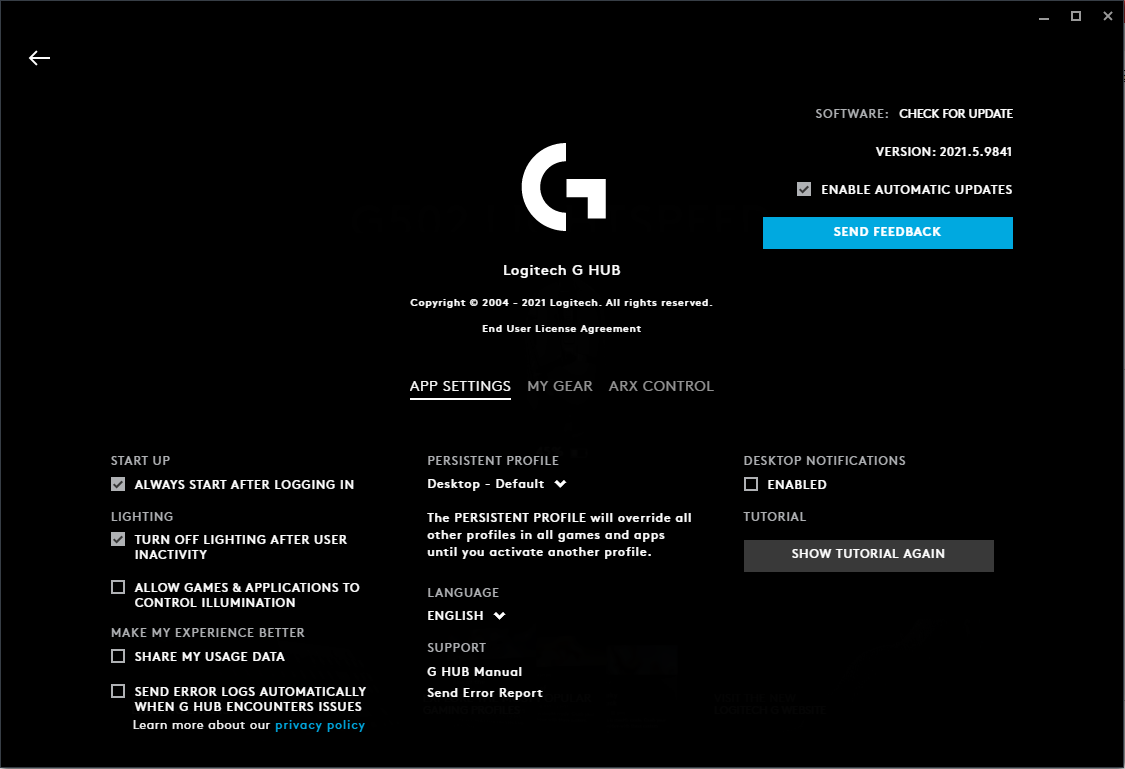
@Vistapocalypse Actually i just checked and funnily the GHUB on Vista Updates beyond 7 and 8.x, lmao Which also means that they can actually run on 7 and 8.x (somehow idk how)
 1 point
 -
Hello everyone, I need driver for Vista 32 bit or 64 bit. My computer is new but i love Windows Vista so i setup Windows vista on my computer. (Hard) Now I don't setuping driver. I have much problems. Because my computer is new and finding driver is hard for my computer. I waiting yours helping... I need : Usb 2.0 & 3.0 driver, Geforce 920MX driver, İntel Hd 620 Driver, Wifi Driver (Very important), Card reader driver, SMBus driver. 34 Bit or 64 bit don't care. İ again setup Windows Vista. İ buy original dvd waiting for coming dvd. After İ setup Windows Vista 32 bit. But now i have Windows Vista 64 bit. İf you are sending links drivers i try setup. Thank you soo much.1 point
-
I'm guessing your laptop has the annoying "optimus" technology , which doesn't work with Vista. If no , then it's fantastic ! These will definitely work with Vista (Vista is in the .inf section , see below) 920MX drivers : 32-bit https://www.nvidia.com/download/driverResults.aspx/105846/en-us 64-bit https://www.nvidia.com/download/driverResults.aspx/105849/en-us %NVIDIA_A% = NVIDIA_Devices,NTx86.6.0,NTx86.6.1,NTx86.6.2,NTx86.6.3,NTx86.10.01 point
-
I'm sorry, for some reason when I try to enter the second page of the posts the content is not displayed and I had not found the previous work done by dmzu. dmzu, thanks for your translation1 point