
randalldale
Content Type
Profiles
Forums
Events
Everything posted by randalldale
-
FYI everyone I also added some scripting if anyone was looking for some addtional help 'wpeutil.exe reboot' command inside your batch file will reboot WinPE 2.0 when you are done copying files. If anyone is interested you can also call wpeutil using vbs with the following line. <script language="vbscript" type="text/vbscript"> function abort() set objWShell = CreateObject("WScript.Shell") objWShell.Run ("wpeutil reboot") end Function </script> This line you can use if you need an exit from your HTA files with say a 'Reboot' or 'Abort' button. Just call the function with your onselect button. example: <input class="quitButton" type="button" name="quitButton" value="Abort" onclick="abort()"></td> most of all thanks again 'JazKal' and everyone else that has been so helpful.
-
Actually had just found wpeutil while browsing the winpe boot command window and did a wpeutil /? to discover 'reboot', testing it right now. Oh and FYI 'restart' is not a command but instead need to use 'reboot' still thought you were right on with wpeutil.exe thanks. I will post the results.
-
Ok Guys, I'm in the process of converting my old unattended XP SP2 install from WinPE 1.6 to WinPE 2.0 and it appears that the 'C:\i386\winnt32 /syspart:c: /tempdrive:c: /Unattend:C:\$OEM$\unattend.txt' after conversion no longer reboots the PC and begins the install. Previous solutions worked very well but with Vista on the horizon I needed to get into the new century and quit using batch files and switch to HTA files. Ok sothe batch files run in the back ground still To preface I want to say that I'm calling HTA files and using VBScripts so that the user interface is more pleasant and getting ready for a Vista deployment. Installation goes like this. 1) Boot to DVD 2) WinPE 2.0 loads and calls begin.hta 3) Begin.hta request user input for end user name and pc name 4) Then I dynamically create the unattend.txt file, copy some drivers and the i386. 5) last thing is the switch (c:\i386\winnt32 /syspart:c: /tempdrive:c: /Unattend:C:\$OEM$\unattend.txt) Now in WinPE 1.6 when this switch was called the system rebooted and started the install. In WinPE 2.0 it ain't happen.... Tell me what I've missed guys or gals... I've tried adding shutdown.exe -r -f to the batch file. I've also used a VBScript inside my HTA file of objWShell.Run("cmd.exe shutdown.exe -r -f), 0 I've also tried objWShell.SendKeys "exit" ..... I'm lost
-
Microsoft just release an 849MB ISO WAIK last night on msdn. Maybe it has some different dated files?
-
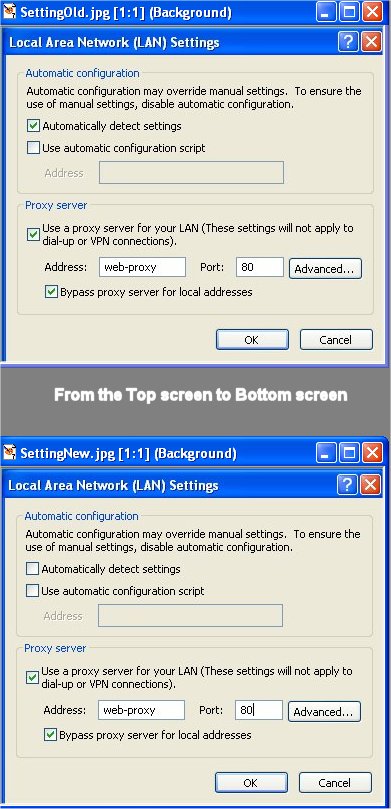
Does anyone know how to get the unattended to uncheck the 'Automatically detect setings' in the Automatic configuration? I can get everything else I need to work but have eyt to find the registry entry or on /off switch that unchecks the box Thanks

-
I'm trying to add in the update from Roxio of EZCD 6.0 basic. Alas none of the swithes I've tried seem to work. Has anyone been able to get silent install done with the 6.1.1.48 update from Roxio?
-
Roxio Easy CD / DVD Creater 6.0 Language switches
randalldale replied to randalldale's topic in Application Installs
Update: I got it fixed and here is the statement. REG ADD %KEY%\006 /V 1 /D "||%CDROM%\apps\notebook\roxio\ecdc6.msi /passive REBOOT=Suppress REBOOTPROMPT=S" /f Now I need to figure out how to also add the update in. any suggestions anyone? -
What do the Runonce parameters mean ?
randalldale replied to UnseenMenace's topic in Application Installs
Go here for the complete listing and explanation of the switches. These are Standard Installer Command Line Options determined by Microsoft for program installs. http://msdn.microsoft.com/library/default....ine_options.asp Also select the 'Command Line Options' link for the rest of the list and explanations. -
Roxio Easy CD / DVD Creater 6.0 Language switches
randalldale posted a topic in Application Installs
I'm using the install process of the runonce for installing Roxio EZ CD 6.0 and I some help in the correct call tag for the Language choices. REG ADD %KEY%\001 /V 1 /D "||%CDROM%\apps\notebook\roxio\SETUP.EXE /s /v\"/passive "" /f It is in my addtion to the runonce for the install and I need to determine how to call the language of choice. I.E French, German, English, Chinese... I believe the tag is something like.... ...roxio\setup.exe /s /v\" /jm "not sure" /g "not sure" /passive"" /f -
Looking for a DMI lookup utility to use for boot selection on multiple boot unattend. I'm sure there out there just haven't been able to find one. Basically it just needs to run and post the unique ID of the unit from the DMI lookup table. That way I can use it to create a multilple install environement. Thanks for your help...
-
can't get Runonce to wait for EZ CD to fnish
randalldale replied to randalldale's topic in Unattended Windows 2000/XP/2003
Update, Figured it out.. pretty simple just created a batch file and called it with the runonceex.cmd command. Since batch files have to run in sequence that solved the problem. -
I'm using this for my media player install and it runs fine... REG ADD %KEY%\004 /VE /D "Windows Media Player 10" /f REG ADD %KEY%\004 /V 1 /D "||%CDROM%\apps\WMP10\MP10Setup.exe /q:A /c:\"setup_wm.exe /Q /R:N /DisallowSystemRestore\"" /f
-
can't get Runonce to wait for EZ CD to fnish
randalldale replied to randalldale's topic in Unattended Windows 2000/XP/2003
According to Micorsoft, the double pipes are required for app installs or executions. I tried it both ways, with and without and doesn't seem to make a difference. But keeping htem in seems to be the way the MS would prefer it. http://support.microsoft.com/default.aspx?...kb;en-us;232509 Te CD-ROM | CD_ROM just goes to show how you can miss type and still get an example out This was more of an example that I had tried both using CDROM and SYSTEMDRIVE both still fail to wait long enough before the next app starts... .NET1.1 and it fails. -
Hi all, Having some issues getting the runonceEX to wait for EZ CD 6.0 to finish before going to the next install. After it starts the install only a few seconds later the system try's to run the next install and fails it and halts until selecting ok. Also I have a batch file that must run on the end and it causes 6 reboots so I can not place it on the end. example.txt
-
Hello All, I have created a deployment unattended DVD with extra software. The company that is adopting this is requesting an additonal work of copying the contents to a virtual dirtectory and running it that way. This is a means of delpoying from a manufacturing stand point. Any thoughts and help would be appreciated.